 |
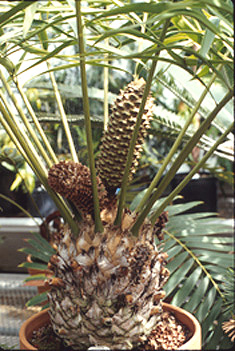
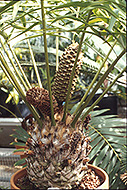
Figure 9. Shown
here are the female cones of the cycad Ceratozamia mexicana . All
cycads are dioecious(i.e. male and
female parts are on different individual plants).
|
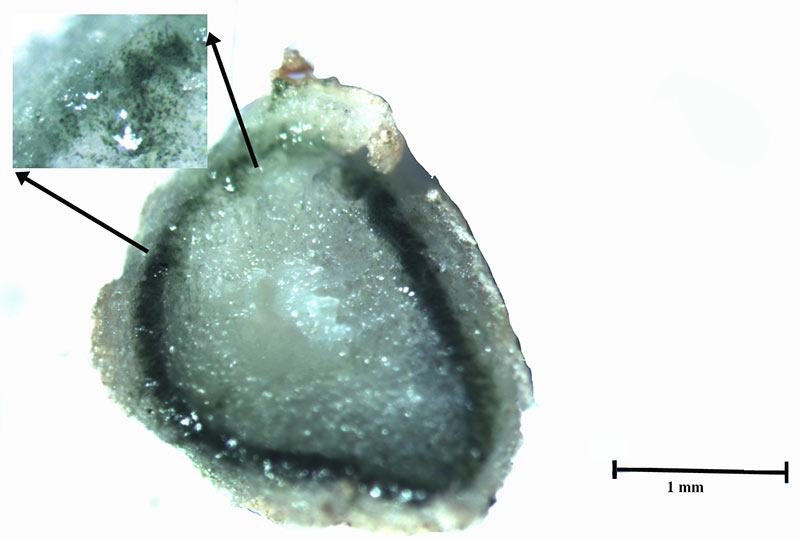
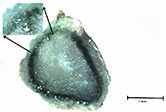
Figure 10. Cross section through coralloid root of Cycas revoluta showing the cyanobacterial zone. |
 |
 |
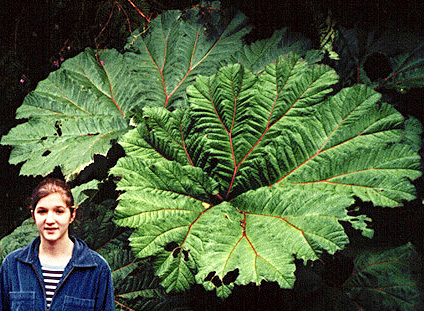
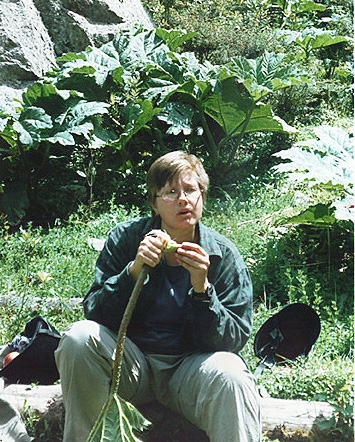
Figures
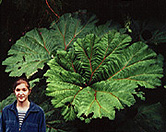
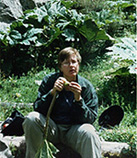
11 & 12. Gunnera sp., an unusual angiosperm that
contains nitrogen-fixing cyanobacteria in pockets at the base
of petioles. This is often referred to as the only angiosperm
that forms a nitrogen-fixing symbiosis with cyanobacteria, however,
this is not strictly true since some tropical angiosperms have
cyanobacterial films on their leaf surfaces. Gunnera has
some of the largest leaves of any plant and is very common in
parts of South and Central America where it is called "nalca." The
young petioles are often peeled and eaten as demonstrated by
Emily Ross (former Reed college student, at right) during her
travels to Chile. |
 |
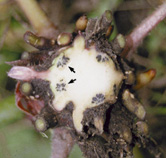 |
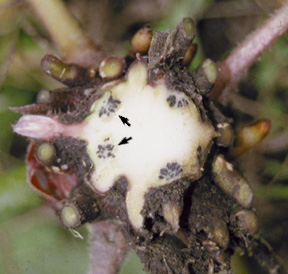
Figure
13. Cross section through the stem of Gunnera with
arrows indicating pockets of cyanobacteria ( Nostoc punctiforma ).
This specimen is from the central mountains of Costa Rica |
.
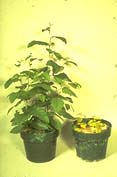 |
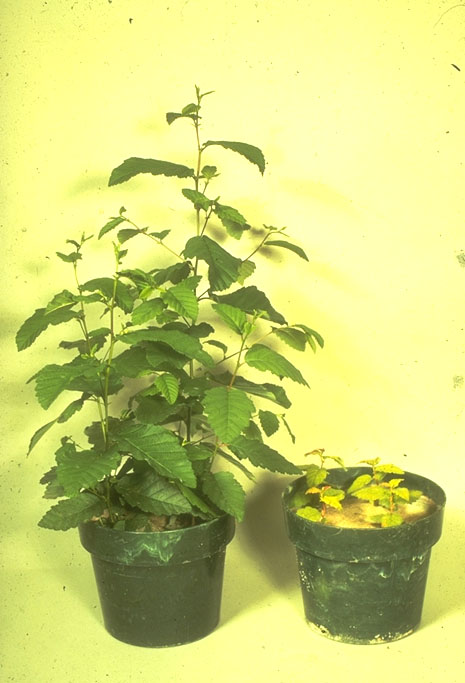
Figure
14. Young plants of red alder ( Alnus rubra ).
Alder is a N-fixing plant that forms a symbiotic association
with bacteria (more specifically an actinomycete) of the
genus Frankia . There are about 21 genera of non-legumes
that fix N. These plants are collectively called actinorhizal
plants and are important contributors of N in ecosystems
where fixed N is scarce. In this figure, all plants are the
same age and are growing in sand. The plants on the left
were inoculated with Frankia . The plants on the right
were not inoculated and are displaying signs of extreme N
deficiency. For more on the ecology of nitrogen fixation
by alder go to the ecology
section of this site. |
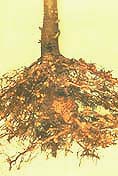
Figure
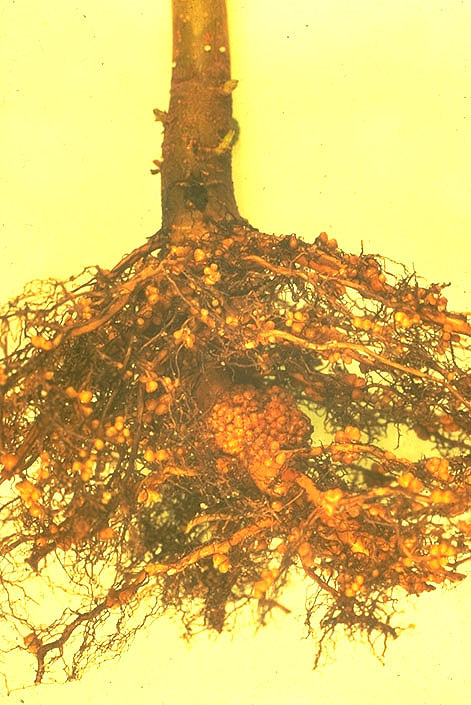
15. Root system of red alder showing abundant root nodules. |
 |
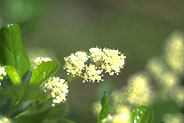
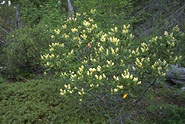 Figures
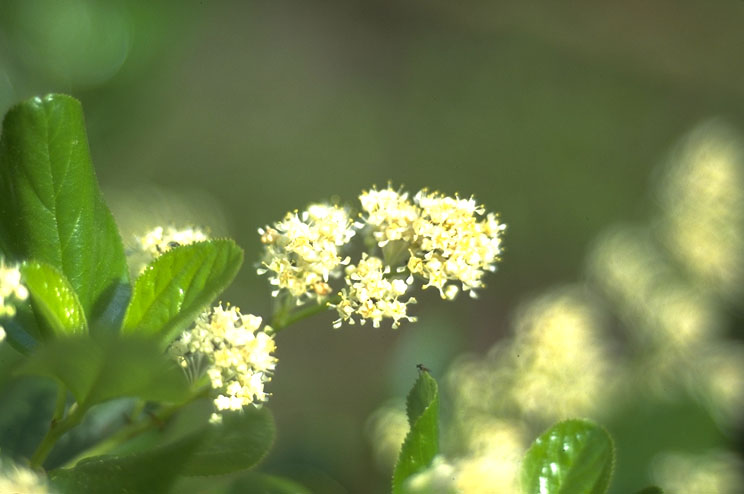
16 & 17. Snowbrush ( Ceanothus velutinus ),
a common nitrogen-fixing actinorhizal shrub throughout
the western U.S Figures
16 & 17. Snowbrush ( Ceanothus velutinus ),
a common nitrogen-fixing actinorhizal shrub throughout
the western U.S |
 |
|
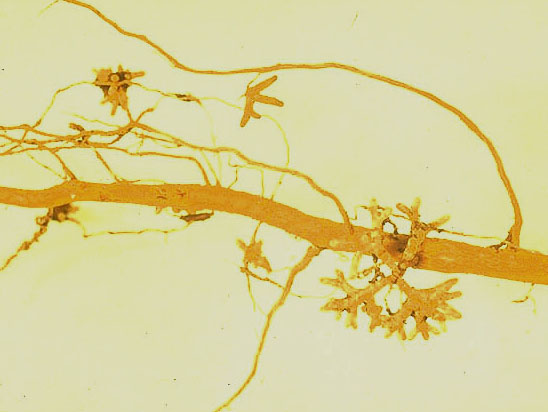
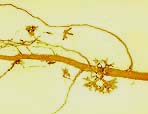
Figure 18. Root
nodules of snowbrush ( Ceanothus velutinus ). |
 |
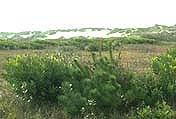 |
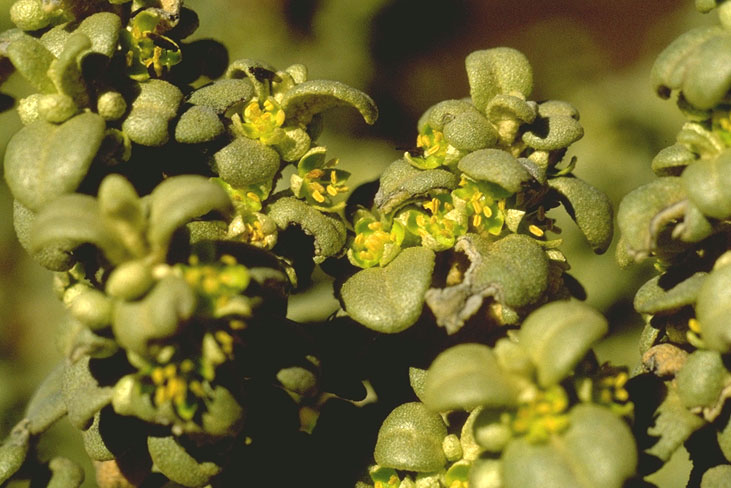
Figure
19. Wax myrtle ( Myrica californica , on left),
a common N-fixing actinorhizal shrub found
in sandy coastal areas in the western U.S. |
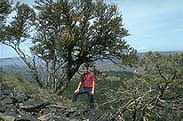
Figure 20. Mountain-mahogany
( Cercocarpus ledifolius ), a common nitrogen-fixing actinorhizal
shrub in arid regions of the western U.S. It is often found on ridge
tops in central and eastern Oregon.
|
 |
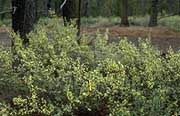 |
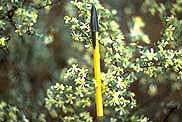
Figures
21 & 22. Bitterbrush ( Purshia tridentata ),
a nitrogen-fixing actinorhizal shrub in the rose family (Rosaceae).
Bitterbrush is common in the understory of ponderosa pine
forests in the Pacific Northwest. It is highly desirable
forage for deer and livestock |
 |
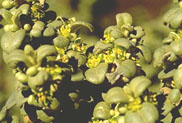
Figure
23. Buffalo berry ( Shepherdia argentea ), an actinorhizal
shrub from Arizona.
|
 |
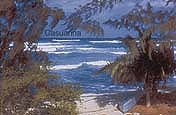 |
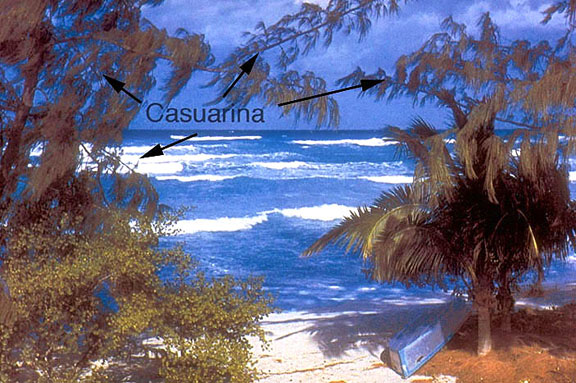
Figure
24. Beefwood ( Casuarina equisetifolia ), a common nitrogen-fixing
actinorhizal tree native to the Old World tropics, but now widely
introduced throughout tropical beaches worldwide including the
Caribbean and Hawaii.
|
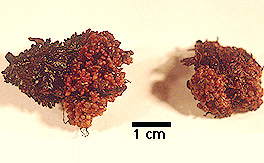
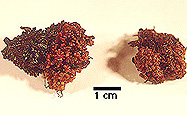
Figure
25. Excised root nodules of beefwood ( Casuarina equisetifolia ).
|
 |
| Photo Credits |
|---|
| Figures 3, 7,14,
and 15 |
Harold Evans, Oregon State Univ. |
| Figures
16 , 17, and 23 |
Keith
Karoly, Reed College
|
All other photos by David Dalton
This page was created for David Dalton, a faculty member in the Biology Department at Reed College.
Questions or comments? Send e-mail to: david.dalton@reed.edu
Created 7/31/97. Last modified 9/17/97.
Copyright ©1997 David Dalton